
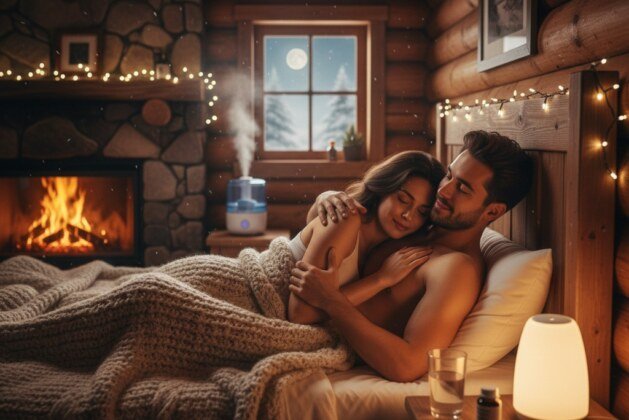
Winter presents a fascinating contradiction in human sexual behavior. Culturally, we joke about “cuffing season”—the phenomenon where singles desperately seek partners to wait out the cold months. Yet, biologically, the short days and freezing temperatures can act as a potent brake on our libido.
While the fireplace suggests romance, your body might be signaling hibernation. Understanding the physiological shift that happens when the temperature drops is key to maintaining a healthy sexual life through the winter solstice, says Dr P K Gupta, best sexologist in Delhi.
The “Cuffing” Instinct vs. Biological Reality
Evolutionary psychology suggests that the urge to pair up in winter is a survival mechanism. In the ancestral environment, warmth and resource-sharing were matters of life and death. This drives the psychological desire for closeness, touch, and “nesting.”
However, your endocrine system often has a different plan.
1. The Sunlight Deficit (The Serotonin Slump)
The most significant impact on winter libido isn’t the cold; it is the darkness.
Sunlight triggers the production of serotonin, the neurotransmitter associated with joy, energy, and arousal.
-
The Result: You feel lethargic rather than amorous. For many, this manifests as a mild form of Seasonal Affective Disorder (SAD), where sex drive is often the first casualty of a lowered mood.
2. The Testosterone Surprise
Here is where the science gets surprising. One might assume testosterone (the primary driver of male libido) drops in winter. However, some studies suggest that testosterone levels in men actually display a seasonal peak in the late autumn and early winter.
-
The Theory: This may be an evolutionary holdover, pushing for conception in winter so that offspring are born in the resource-rich autumn/late summer of the following year.
-
The Conflict: So, while the fuel (testosterone) might be there, the ignition (serotonin/energy) is often damp due to the weather.
3. The “Cold Feet” Phenomenon is Real
A famous study from the University of Groningen in the Netherlands found a direct correlation between temperature and the ability to reach orgasm. The study discovered that when couples wore socks, the ability to achieve orgasm increased by 30%.
Why? Thermoregulation. When you are cold, your sympathetic nervous system (the “fight or flight” mode) activates to preserve heat.
Reviving the Winter Libido: A Strategy
To counter the hibernation instinct, you have to “hack” your environment.
Chase the Light (Vitamin D)
Since you cannot force the sun to shine, you must supplement. Vitamin D is essential for the production of sex hormones.
-
Action: Consider a Vitamin D supplement or a “Happy Light” (light therapy lamp) used for 20 minutes in the morning to reset your circadian rhythm.
The “Skin Hunger” Solution
In summer, skin is exposed. In winter, we are bundled in layers of wool and synthetic fabrics. This leads to “skin hunger” or touch deprivation, which lowers oxytocin levels.
-
Action: Prioritize non-sexual skin-to-skin contact. Massages or simply sitting together without heavy layers can stimulate oxytocin release, which is the bridge to sexual arousal.
Hydration and Circulation
Winter air is dry, and indoor heating is even drier.
-
Action: It sounds unsexy, but drinking more water and using a humidifier in the bedroom can improve physical sensation and stamina.
Summary
Winter doesn’t have to be a dormant period for your love life. It is simply a season that requires more intention. By respecting the body’s need for warmth and compensating for the lack of light, you can turn “cuffing season” into a period of genuine connection.



Leave a comment